Marzo 26, 2026
10:30
Low-dimensional magnetism in epitaxially grown van der Waals materials: From 2D-XY systems to high-Tc magnets driven by self-intercalation
Where and when
Date
Marzo 26, 2026
10:30
Featured speakers
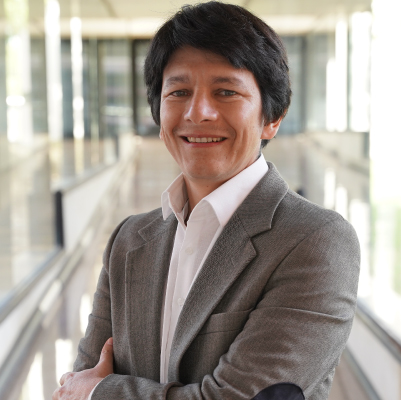
Dr. Amilcar Bedoya Pinto
Senior Fellow - CIDEGENT - ICMOL
Read bio
Dr. Amilcar Bedoya-Pinto completed his undergraduate studies in Physics at the Technical University of Munich (TUM), carrying out his Master thesis at Walther-Meissner-Institute (WMI) on the growth and characterization of ZnO-based magnetic semiconductors. He received his PhD in Condensed-matter Physics at the University of Göttingen, focusing on charge and spin transport studies of epitaxial metal-semiconductor heterostructures, and being awarded with the Dr. Berliner-Ungewitter Prize for outstanding PhD theses (2011). He started his Postdoctoral work at CiC nanoGUNE research center in San Sebastian (Spain), focusing on molecular-based spintronics and hybrid metal-molecule functional interfaces. Then he moved to the Max-Planck Institute of Microstructure Physics (Director: Stuart Parkin) as a Research Associate, leading ambitious projects on two-dimensional materials and Weyl semimetal-based thin films and heterostructures, ending up in groundbreaking publications (Science, 2021). Since 2022, he got a position as a Distinguished Researcher of the Generació Talent (Gen-T) program at the Institute of Molecular Science (ICMol) where he leads a research group focusing on molecular beam epitaxy of 2D ferroic and topological material heterostructures.
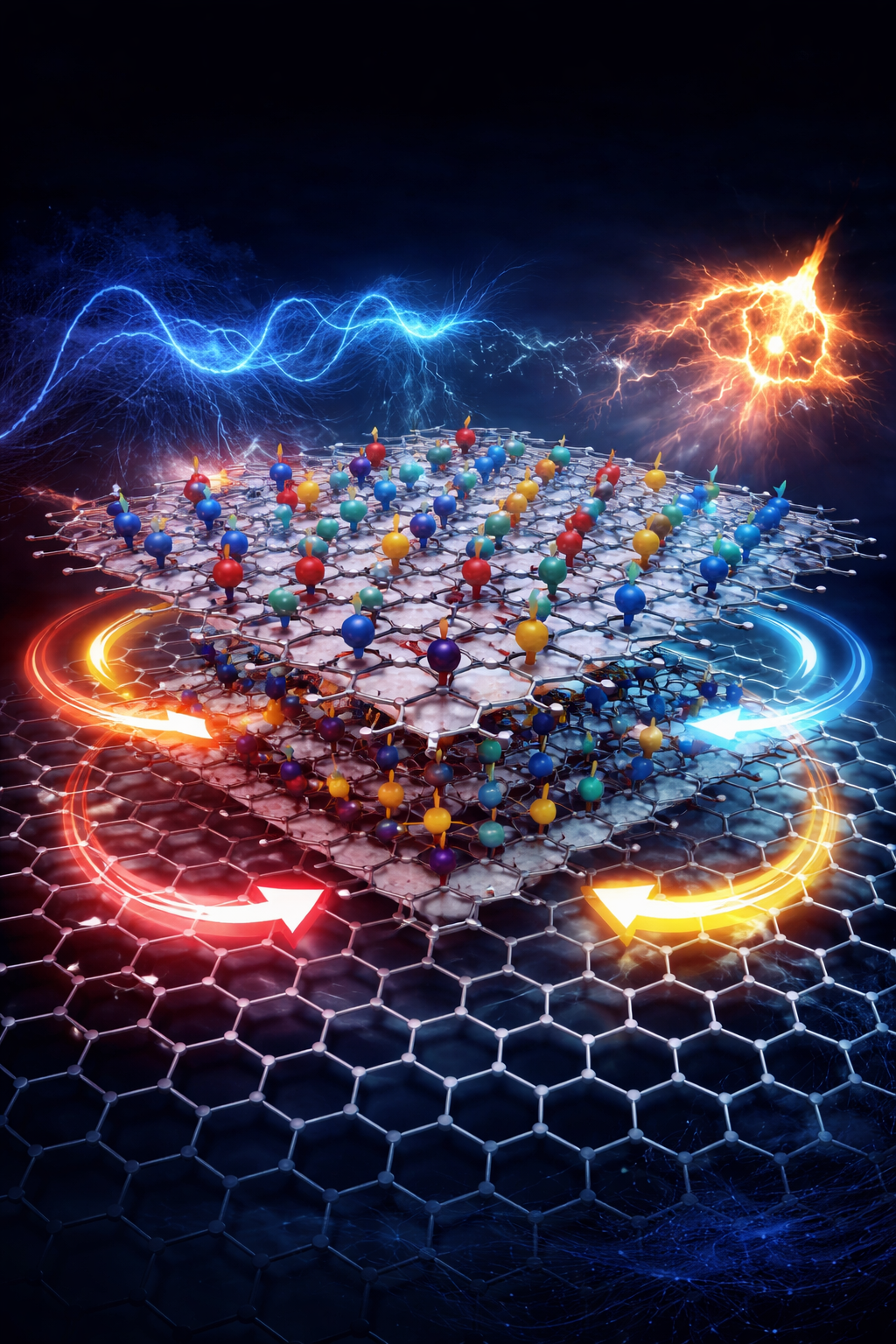
In this talk, I will discuss how the bottom-up growth of van der Waals magnets by molecular beam epitaxy (MBE) promotes favorable conditions to stabilize specific magnetic behavior which has remained elusive on studies with exfoliated bulk crystal flakes – such as XY anisotropy and enhancement of magnetic exchange driven by self-intercalation.
I will focus on the successful van-der-Waals epitaxy of a CrCl3 monolayer grown on Graphene/6H-SiC(0001), revealing intrinsic ferromagnetic order with easy-plane anisotropy and a 2D-XY magnetic universality class [1]. This constitutes the first realization of a Berezinskii-Kosterlitz-Thouless (BKT) transition in a two dimensional magnet, and further allows the stabilization of topological spin textures with in-plane winding, such as merons. The important role of the van der Waals substrate interaction and the underlying crystal symmetry to achieve this rather unsual magnetic behavior will be discussed, thereby highlighting routes on how to control the anisotropy of 2D magnets via growth and substrate engineering.
Further peculiarities of MBE-grown van der Waals magnets, such as an increase of the Curie Temperature driven by self-intercalation [2], will be shown in the prototypical layered magnet Fe5GeTe2. The epitaxial films exhibit ferromagnetic ordering up to 375 K, concomitant with a sizable Fe occupation within the van der Waals gaps. Supported by first-principles calculations, we infer that the higher magnetic ordering temperature results from an increased exchange interaction among the Fe5GeTe2 layers mediated by Fe within the vdW gaps. Our findings establish self-intercalation during epitaxial growth as an efficient mechanism to achieve high-temperature magnetism in a broad class of van der Waals materials.
[1] Bedoya-Pinto, et.al. Intrinsic 2D-XY ferromagnetism in a van der Waals monolayer. Science 374 (6567), 616-620 (2021)
[2] Silinskas, et. al. Self-intercalation as origin of high-temperature ferromagnetism in epitaxially grown Fe5GeTe2 thin films. Physical Review Letters 133, 256702 (2024).